Step 1
A customer request arrives
NotchPath turns the new message into an owned request and starts a trace with the latest question and thread context.
Product screenshot
Turn each customer, supplier, or internal request into owned, trackable work with the right knowledge, response, review path, and next step.
Ingest
Infer
Propose
Confirm
Activate

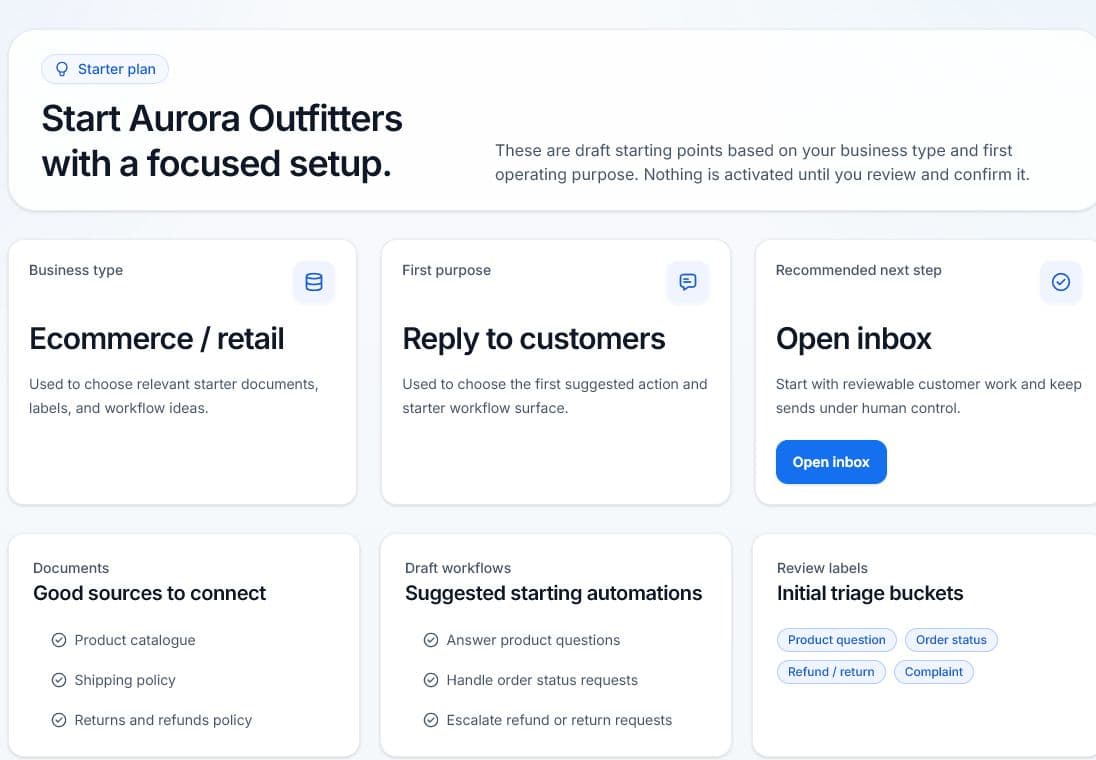
Connect the sources
Start with the communication channels, Drive folders, policies, SOPs, FAQs, product sheets, forms, and notes your team already uses.
Draft the work
Generate proposed replies, selected facts, missing context, likely workflows, and evidence the team can inspect.
Review before action
Keep customer-facing replies, policy-sensitive decisions, workflow steps, and external actions in human review.
Example run
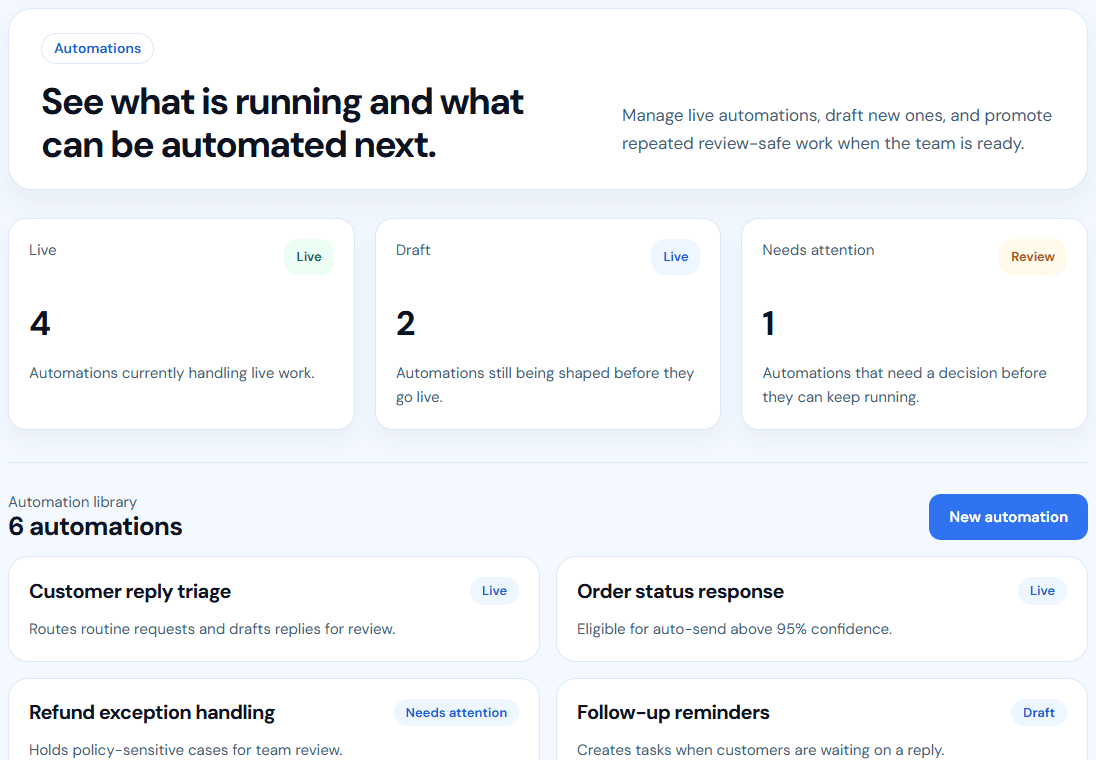
A request moves through intake, ownership, knowledge checks, response preparation, review, and a traceable resolution.
NotchPath turns the new message into an owned request and starts a trace with the latest question and thread context.
It identifies the likely route, checks approved knowledge, spots missing facts, and keeps uncertain information out of trusted replies.
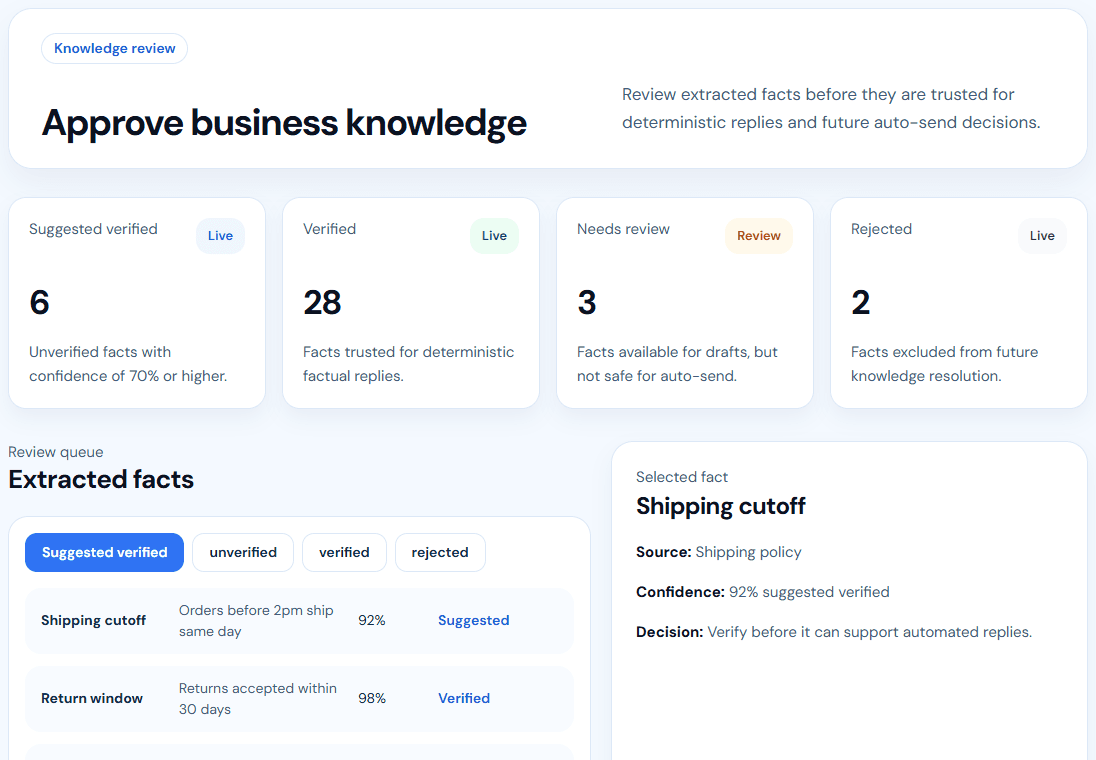
The team opens the review details screen, checks the original email, evidence, and draft reply, then edits or approves it before anything is sent.
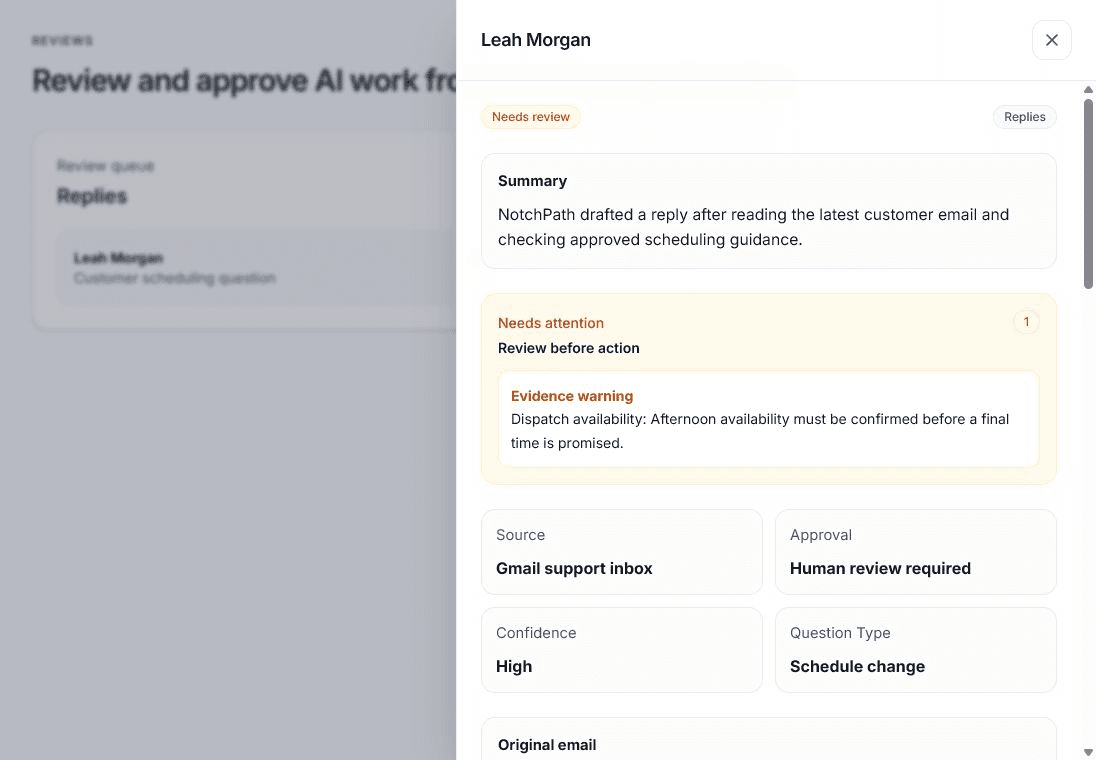
After approval, NotchPath sends the reply and records the confidence level. Repeated high-confidence cases can later become candidates for automation.
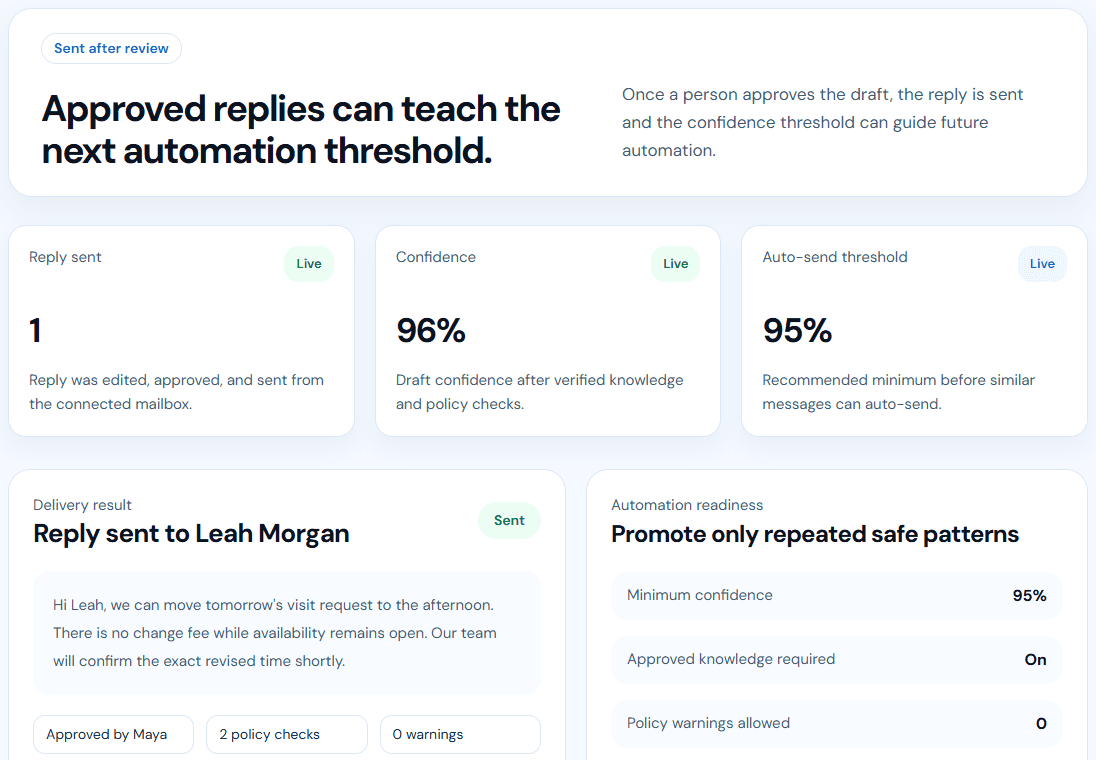
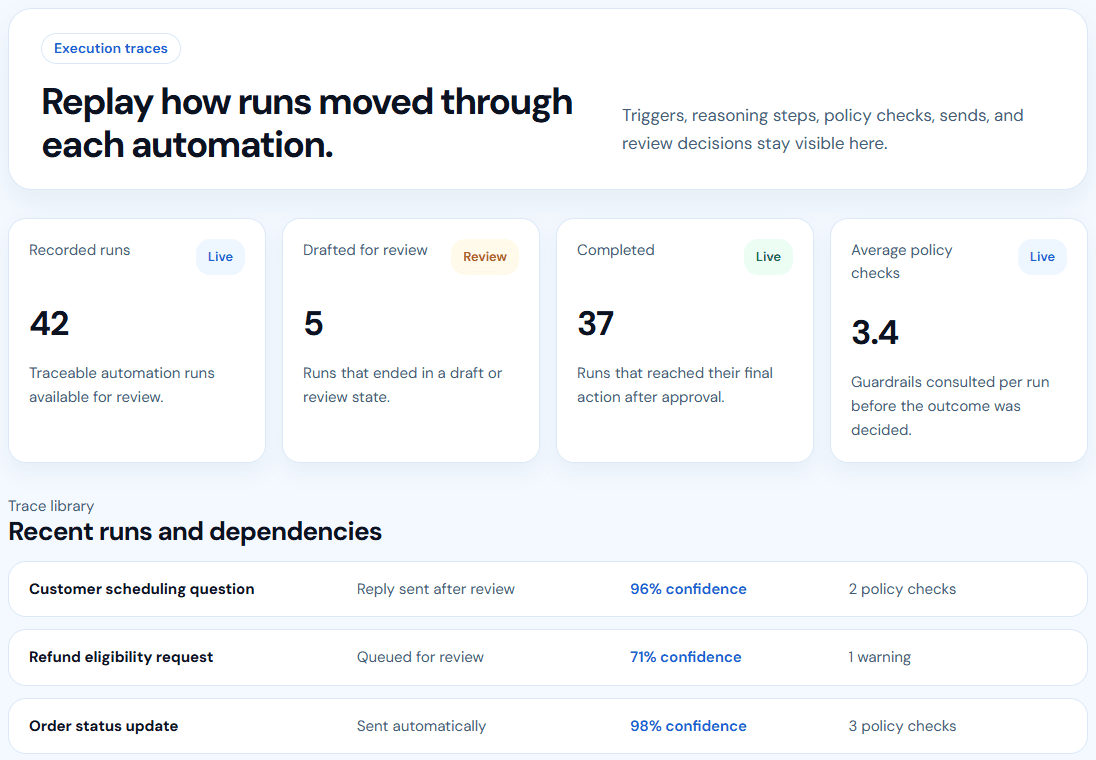
Every trigger, reasoning step, policy check, and final decision is visible in the execution trace for review later.
Let AI interpret messy requests, documents, and handoffs while people keep control over facts, policies, workflow activation, and customer-facing decisions.

Draft replies and workflow proposals stay grounded in approved facts, source documents, prior context, and operating decisions.

One review layer keeps draft workflows, missing facts, follow-ups, and exceptions visible before action.

Deterministic policy checks decide whether work can run, needs edits, or must stay with a human.

Every run records the trigger, selected facts, missing context, policy result, tool calls, and final decision.

Owners can see what was automated, what was held, where knowledge is missing, and how operations are improving.
How it stays safe
LLMs interpret customer requests and source material. Deterministic checks decide which facts can be used, which policies apply, and whether a human must review before anything is sent or activated.
Show which answers, policies, product details, and workflow assumptions are supported by approved sources.
Route draft replies, workflow changes, missing context, exceptions, and follow-ups into one review layer.
Apply policy checks, reviewer permissions, audit logs, and traceability to every live customer-facing action.
Security and control
NotchPath is built for teams that need AI help without giving up control over customer communication, connected knowledge, or workflow activation.
AI output creates drafts, suggestions, gaps, and exceptions. Live automations and customer-facing sends stay behind confirmation gates.
Users work inside a workspace context with explicit access, setup mode, and reviewer responsibilities instead of one shared AI inbox.
Replies and workflow proposals are grounded in connected documents, approved facts, policies, product sheets, and visible context.
Execution traces show which facts were used, which checks ran, what was held for review, and what action was approved or blocked.
Connect sources, extract facts, propose workflows, confirm policy checks, and trace every live action.
The product is built around a controlled path from incoming request to sourced draft, reviewer decision, auditable execution, and owner-level visibility.
Talk to us